Silk whispered, cady moved and boiled wool held its ground.
Fashion is often shown through its most beautiful moments: a finished garment, a photograph, a model who seems completely at ease in what she is wearing.
What remains hidden is everything that came before—the uncertainty, the changes of direction and those few centimetres that can keep you awake at night.
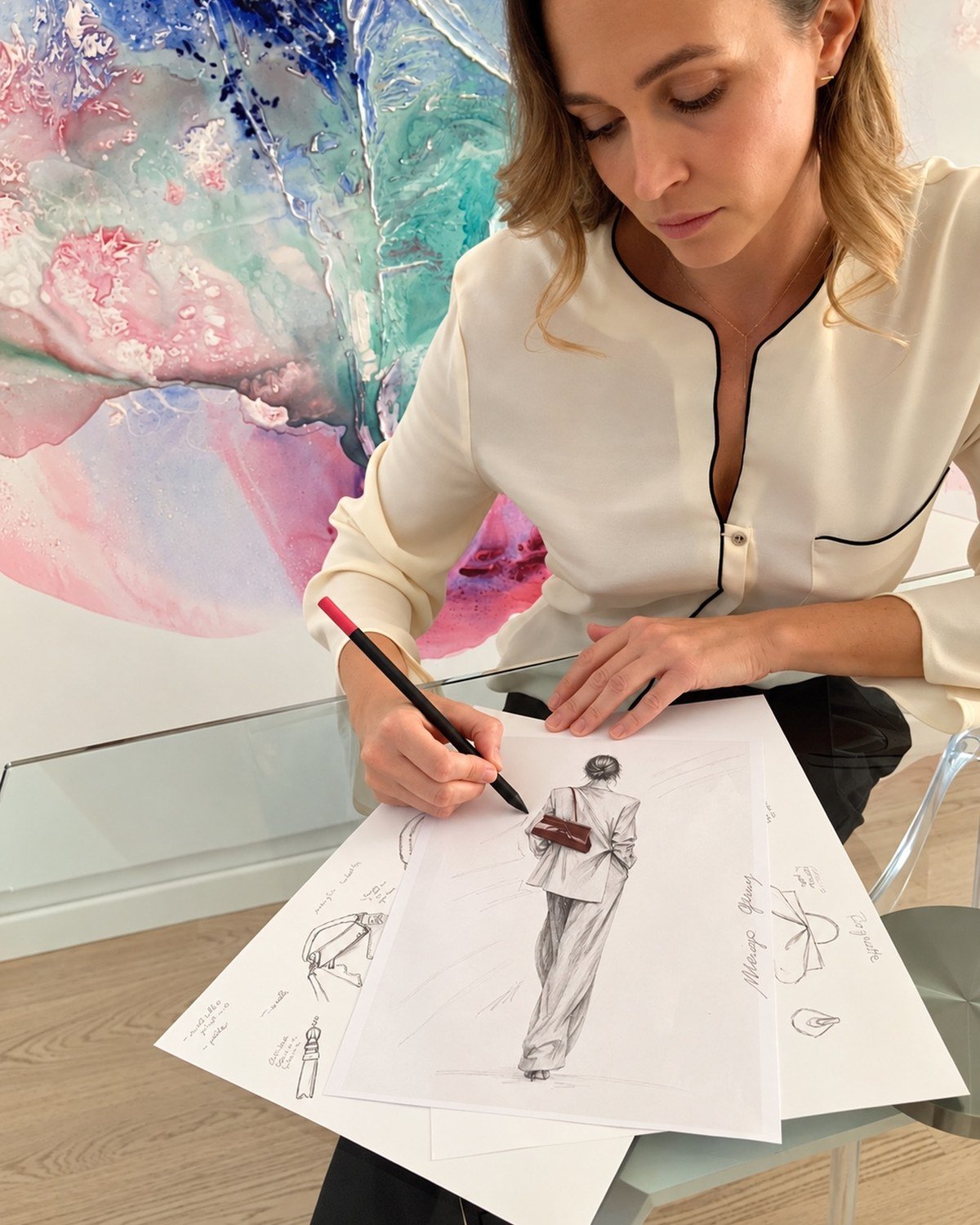
My creative process usually develops in three stages: the initial idea, the search for the right shape and materials, and finally the practical work of turning a drawing into something that can be worn.
To explain it, I have chosen one look from my latest collection: a black ensemble composed of a cady shirt, slightly oversized trousers and a sleeveless jacket in boiled wool. The jacket has wide folded panels at the front and strong shoulders, and it gives character to the entire look.
It Usually Begins with a Feeling
Inspiration does not always arrive while I am sitting at my desk. It may begin with a journey, a walk in the mountains, the sea on a grey day or a detail that stays in my mind for reasons I cannot immediately explain.
Then there are periods when what I feel enters my work almost without permission.
During lockdown, my sketches looked like faded watercolours. I kept choosing greys, deep blues and subdued shades. Everything appeared quieter because I was quieter too.
When life began to open again, colour slowly returned to my sketchbooks. But I had also developed a desire for clearer, stronger lines. I wanted to design clothes for a woman who was present, aware and no longer willing to disappear into uncertainty.
The black ensemble was born from that feeling.
Black can express sadness, but it can also be a declaration. In this case, it meant: we are still here.
I imagined a woman who did not need an uncomfortable suit of armour to feel strong. Her clothes had to protect her without hiding her. The trousers would be fluid, the shirt simple and the jacket more structured, almost like a frame around her ideas.
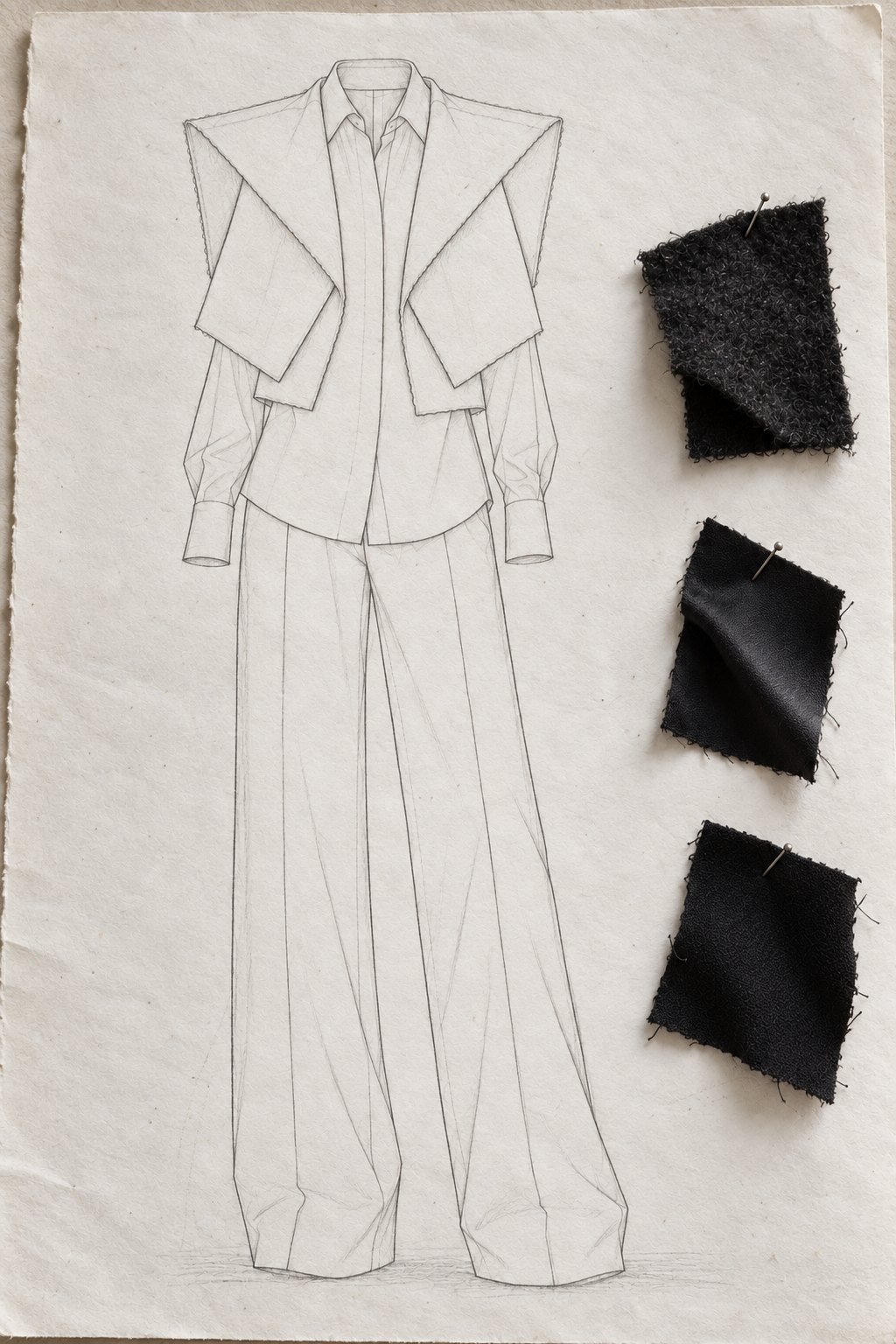
The first version was different from the final one. The shirt was longer and the jacket had sleeves. On the screen, the proportions seemed interesting. Once we began looking at the pieces together, however, I realised that the design was saying too many things at once.
Finding the Right Materials
This is the stage when an emotion has to become something more precise.
I begin to ask myself how the woman will move, how the garment will feel against her body and whether the silhouette will still make sense outside the sketch.
For the shirt and trousers, I chose cady. I like it because it moves without losing its shape. It is soft but not fragile, elegant without being precious.
I also considered silk. It had a beautiful lightness, but beside the stronger jacket it felt too delicate. The cady created a better balance and allowed the shirt and trousers to become one continuous, fluid line.
The jacket needed a fabric with an entirely different character. Its folded front panels had to maintain their shape, so I chose boiled wool. It is compact and warm, but it can still be shaped without becoming rigid.
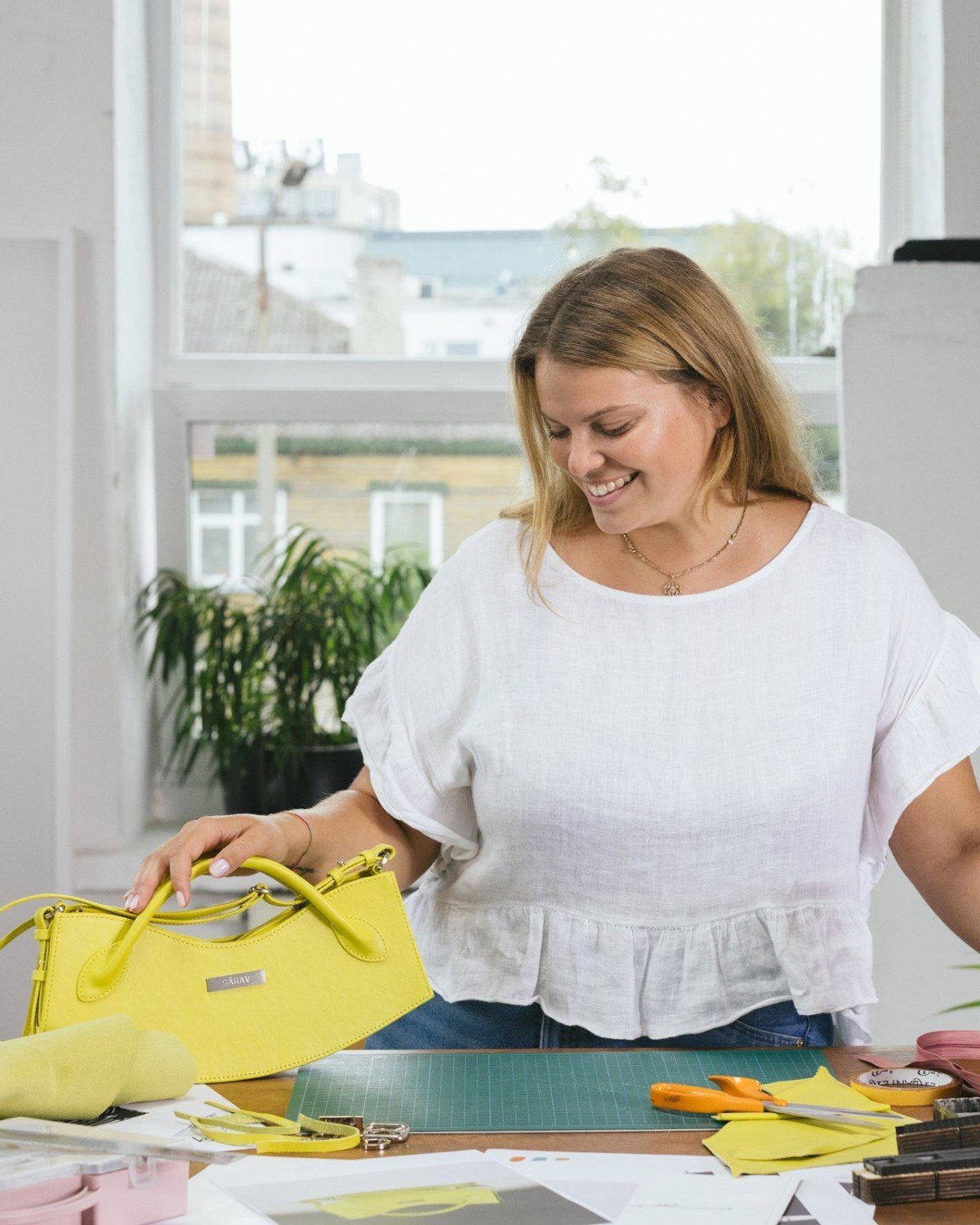
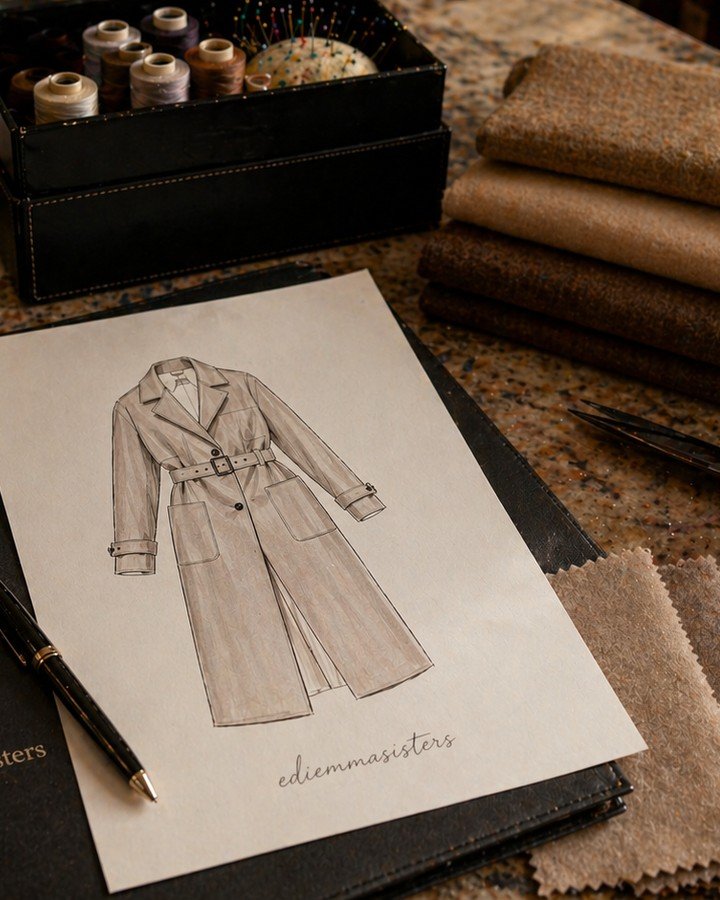
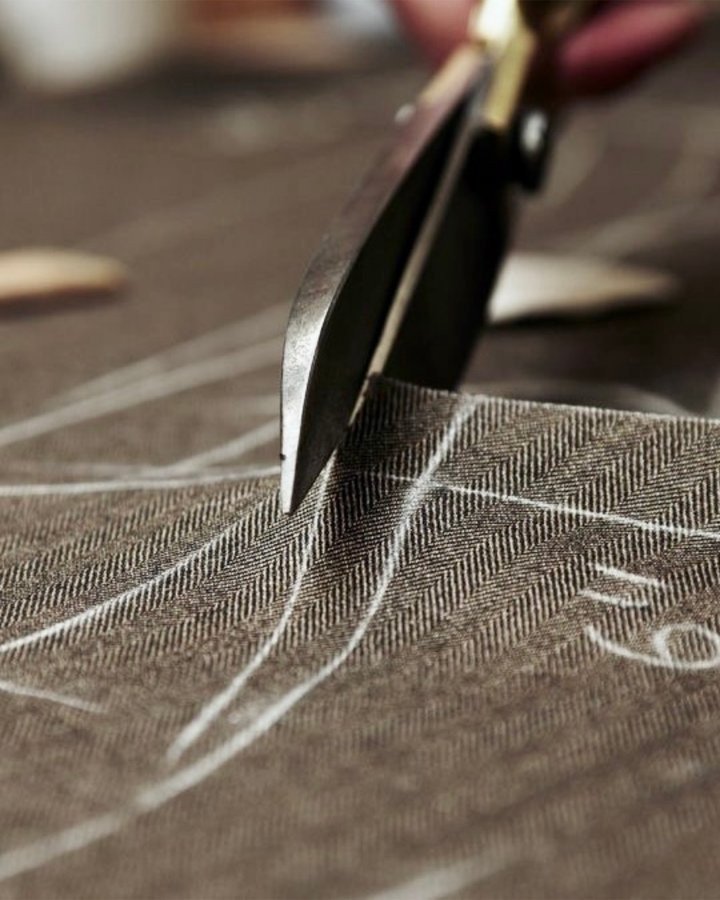
I spent time comparing the samples on the table: silk, cady and wool. This is still one of the parts of my work that I enjoy most. Touching the fabrics often tells me more than looking at them.
Silk whispered, cady moved and boiled wool held its ground.
For this look, I needed the last two.
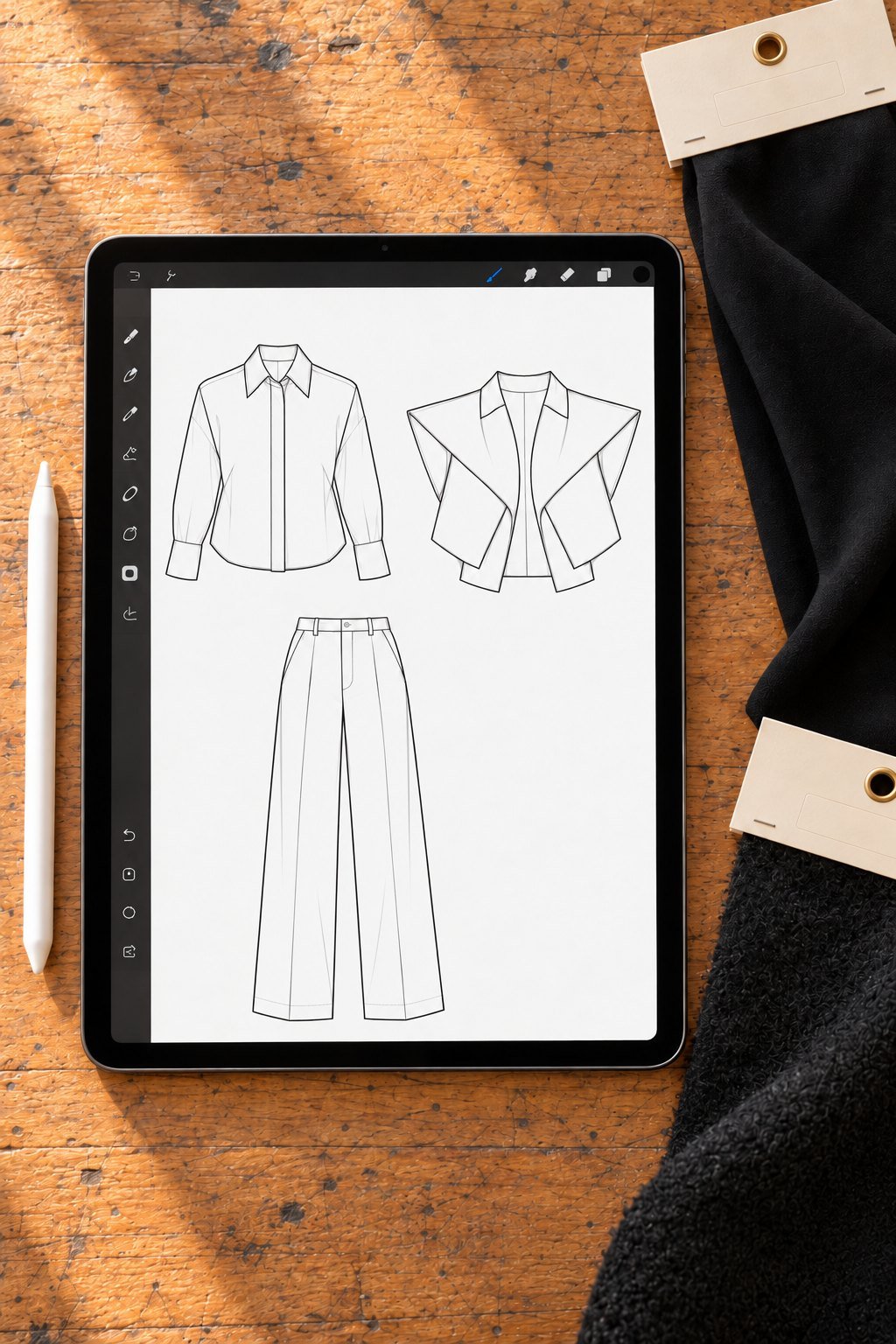
I first developed the three pieces separately on the iPad. The shirt, trousers and jacket each had to work on their own before becoming part of the complete look. At this stage, I try not to become too attached to the original drawing. A design often improves when I accept that something has to be removed.
When the Drawing Meets a Real Body
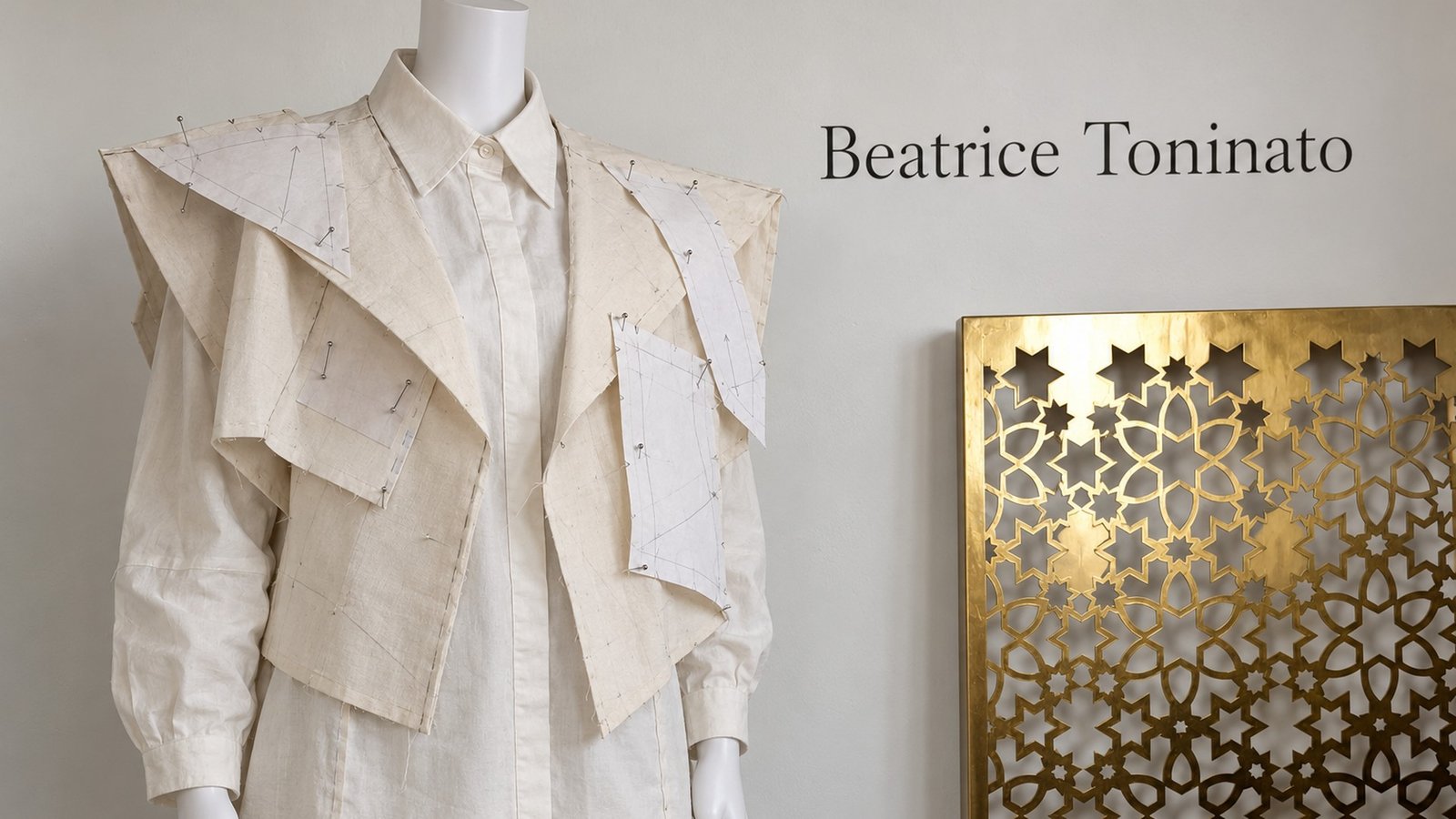
The most practical part begins when the design leaves the screen and becomes a pattern.
This is where the work with the pattern maker becomes essential. A line that looks effortless in a drawing can be surprisingly difficult to reproduce in fabric, especially when volumes and proportions have to interact with a moving body.
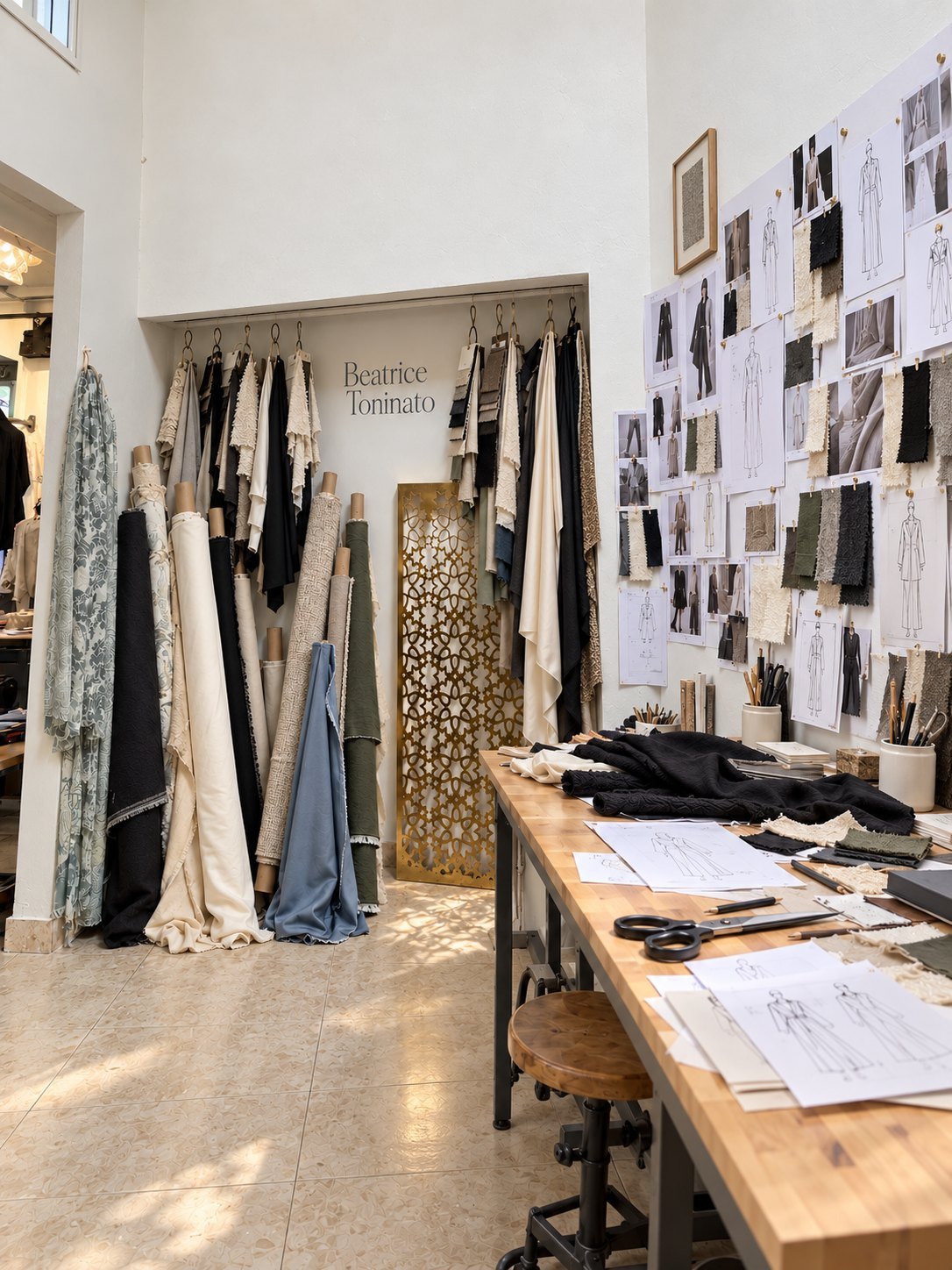
The jacket was the most complicated piece. In its first version, it still had sleeves. Once we put everything together, the result felt too heavy. The shoulders, folded panels and sleeves were all competing for attention.
We removed the sleeves, and the jacket immediately became lighter and more modern. The shirt underneath was now visible, creating a contrast between the soft cady sleeves and the structured wool.
We also shortened the shirt. The longer version interrupted the line of the outfit and made the upper body look heavier. Bringing it closer to the hips restored the balance between the jacket and trousers.
The trousers needed a different adjustment. I wanted them slightly oversized, but not so wide that the woman disappeared inside them. We refined their volume while keeping the movement I had imagined.
Then came the first fitting.
This is always the moment of truth. A garment may be perfect on paper and still feel completely wrong when worn.
We softened the shoulders, brought the front panels slightly closer to the body and adjusted the trousers so that they moved naturally. Even the model’s posture helped me understand the outfit better. At first, everything looked too controlled. When she relaxed her shoulders and shifted her weight naturally onto one leg, the clothes finally began to speak.
That fitting reminded me of something simple: strength is not the same as stiffness.
In the final version, the cady moves softly while the boiled wool gives the silhouette its direction. The black no longer feels sombre. It feels deliberate and self-assured.
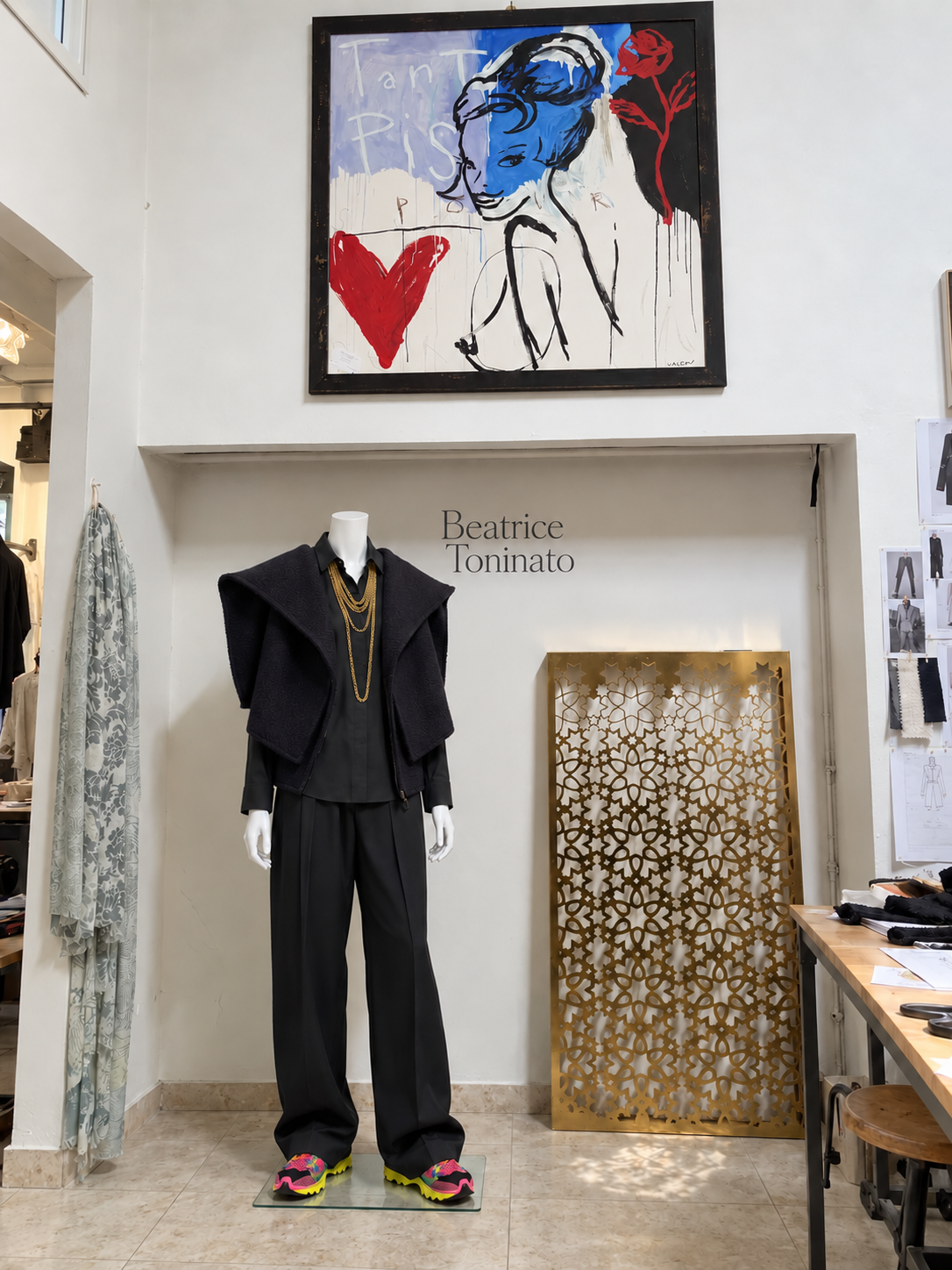
Looking at the finished outfit, it is easy to forget the longer shirt, the sleeves we removed and all the small changes made along the way. Yet those corrections are not mistakes to conceal. They are the creative process.
An idea rarely arrives complete. It grows through patience, doubt and practical decisions until it finally becomes something another person can wear.
Perhaps this is what I love most about fashion: transforming an emotion into a shape—and then watching that shape come to life.
Read Next

Beatrice Garofoli
Beatrice Garofoli, Founder and Creative Director
When Art Becomes Form
Vitamia Magazine
Dreaming in Silence: The Indomitable Journey of Sogna te Stesso™
Vitamia Magazine
The Art of a Moment: How Life Inspires the Way We Dress
Vitamia MagazineSubscribe to our latest newsletter