I first encountered the word sartorialism around the age of twenty-five, when I began to study the craft of tailoring. Yet long before I could name it, I was already surrounded by its essence. As a child in Port-Vila, I watched my mother sewing trousers for military officers. Their uniforms fascinated me: not for their decoration, but for their discipline. The cut itself carried authority. Even then, I sensed that the way a garment is built can transform the way a person moves, feels, and exists in the world.
For me, sartorialism is the harmony between cut, material, and construction. It is the art of giving form to something that moves with the body as naturally as skin. A true suit is not worn; it is inhabited. Every detail matters: the balance of a lapel, the rhythm of a stitch, the curve of a shoulder. The architecture of the garment becomes invisible, yet it shapes presence.
The choice of fabrics lies at the heart of this art. I often work with fine wools known as Super 120s, 180s, or 210s. These numbers refer to the fineness of the fibers: the higher the count, the thinner, lighter, and more luxurious the wool. A Super 120s offers structure and durability, while a Super 210s feels almost like air against the skin. Cashmere, on the other hand, is softness made tangible, a fabric that warms without weight and holds color like velvet light. Such materials do not just serve beauty; they require respect. They respond differently to touch, temperature, and movement. Understanding them is like learning a language of texture and silence.
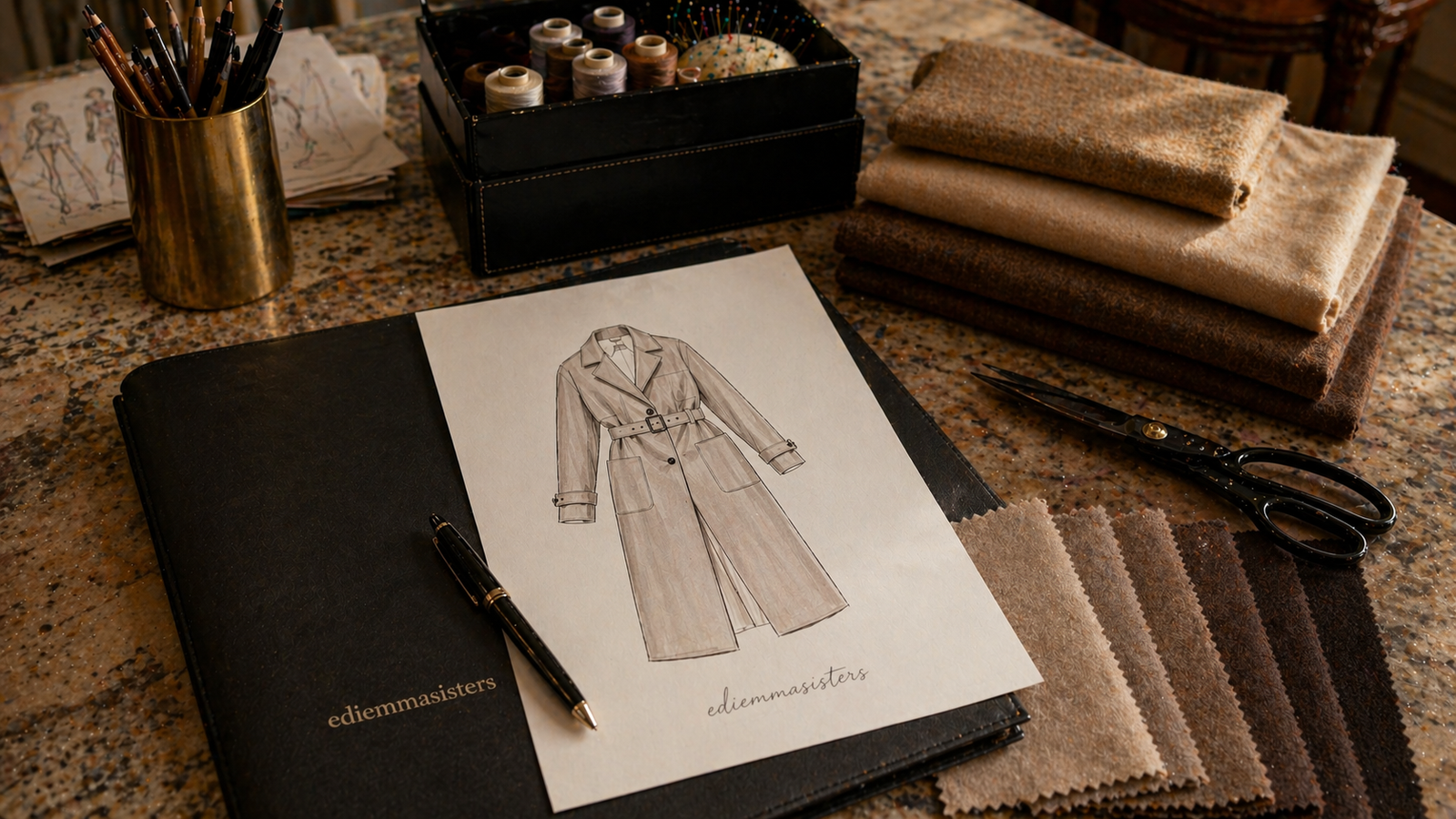
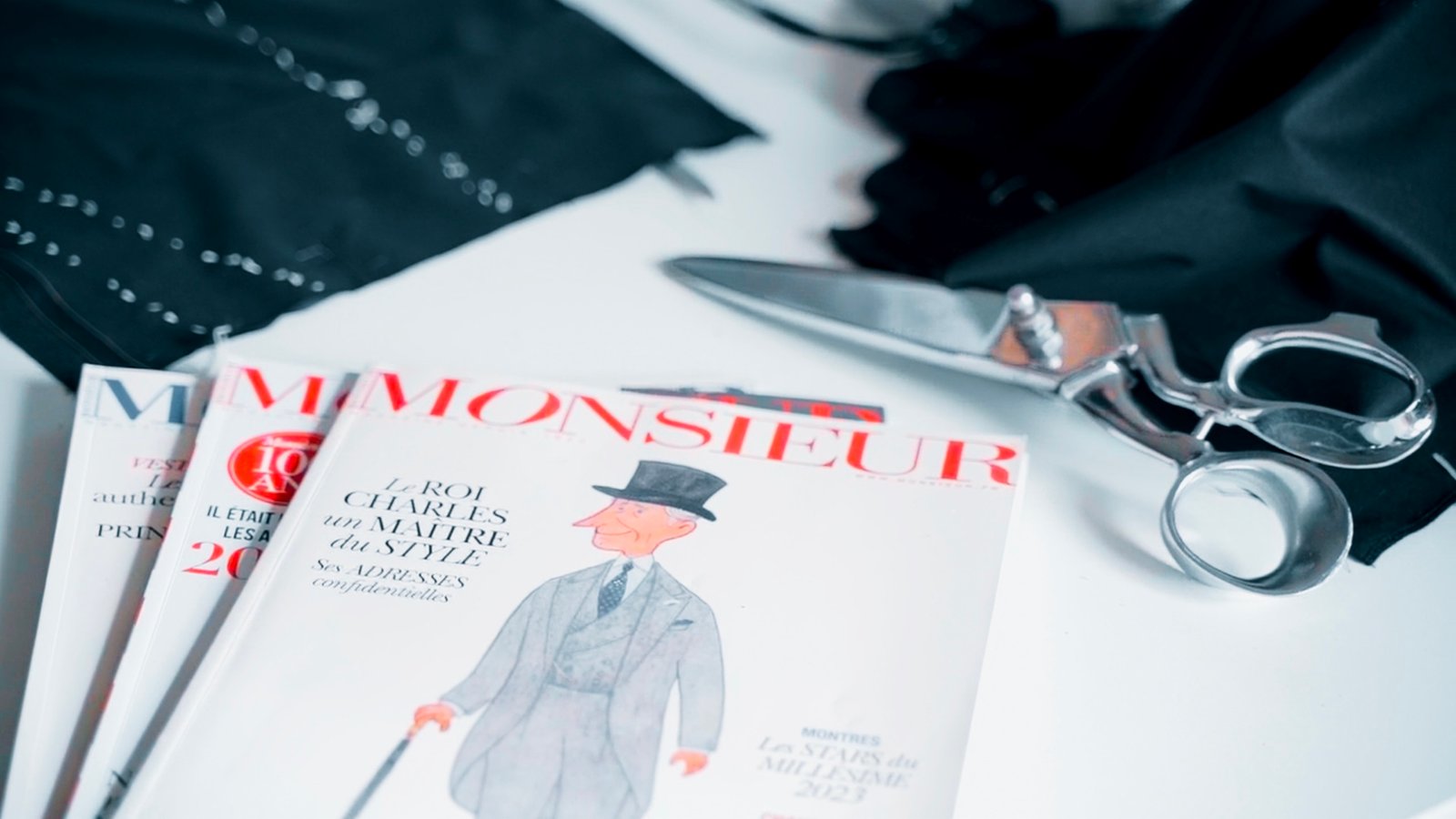
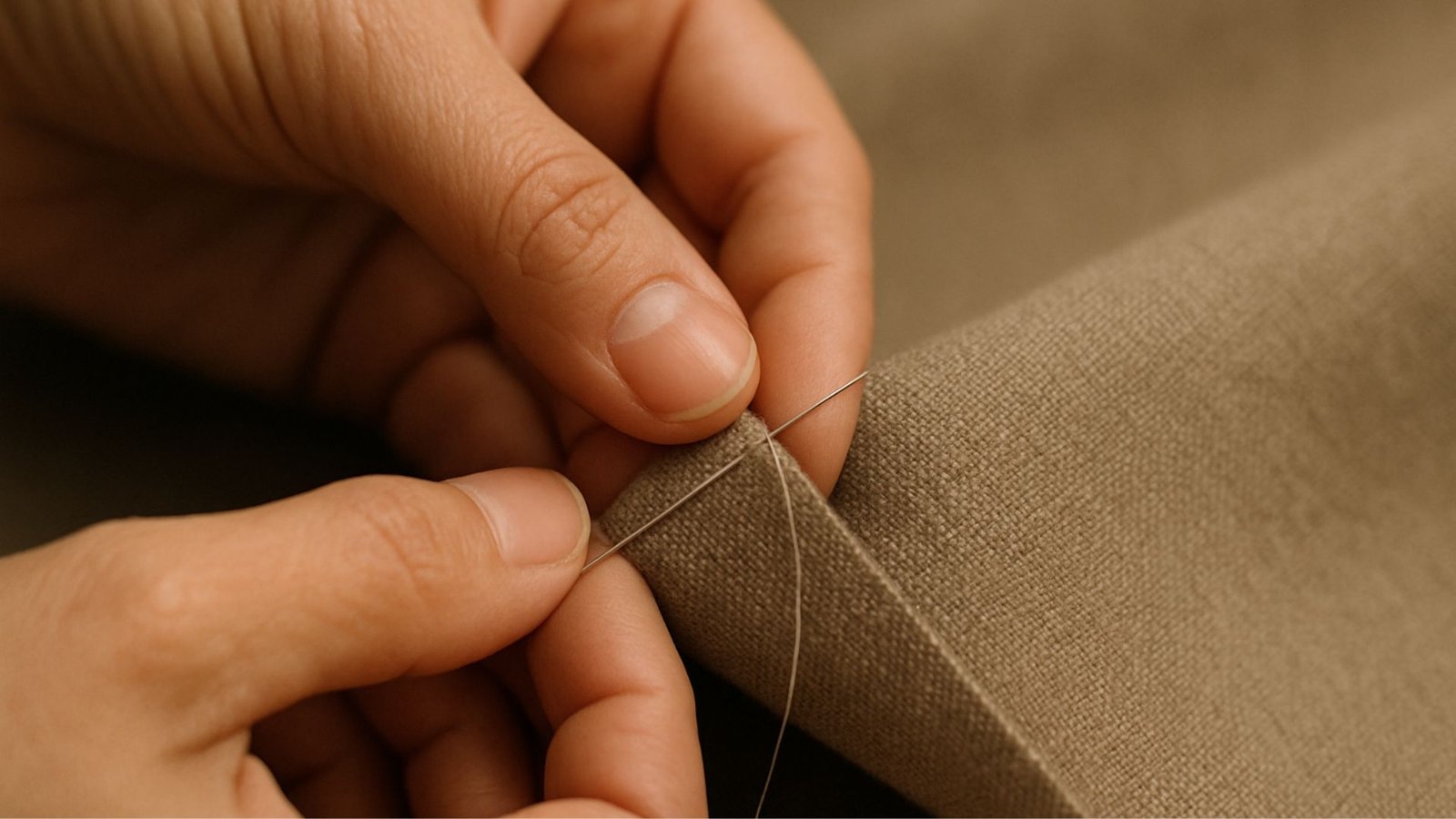
My atelier is a quiet space. Sunlight moves slowly across rolls of fabric, scissors rest beside a chalk line, and threads catch the air like notes of music. Often, there are photographs of my hands at work rather than of me. I prefer it that way. My hands tell the story better: tracing, cutting, folding, adjusting, gestures that speak of patience and devotion. Discretion has always felt natural to me. I do not seek to be seen; I want the work to speak.
Madeleine sketching a men’s suit accented with a vivid green collar
Each fitting is a small revelation. When someone tries on a jacket made just for them, their body reacts before their mind does. The shoulders settle, the breath changes, the gaze lifts. It is not about luxury in the superficial sense, but about balance and presence. Sartorialism respects both the person and the material. It does not dictate; it reveals.
This philosophy lives in the creations of ANQA BLANC. Some pieces whisper, others dare to speak louder. A women’s suit in neon orange, cut with origami-inspired folds, merges audacity and discipline. A red velvet suit, made from cotton velvet light enough for every season, brings depth and quiet confidence. Both express what I believe: that true elegance is timeless and deeply personal. Sartorialism is not fashion; it is identity expressed through precision.
Hand-lining of a custom-made jacket lapel.
Growing up in Vanuatu, I was shaped by contrasts. The island carried both French refinement and English restraint, mixed with the natural abundance of the tropics. From the French, perhaps, I inherited a love of structure and silhouette; from the English, a respect for tailoring as quiet strength. These influences met the vivid colors and spontaneity of island life, and together they formed my language of balance. The tropical light taught me to see how color behaves, while the colonial architecture taught me proportion.
In a world of fast fashion and loud logos, I continue to believe in sartorialism because it restores individuality. Fast fashion makes everyone look alike; tailoring returns us to ourselves. Like handwriting, it is intimate and unrepeatable. Each stitch carries intention, each fabric carries a story.
Madeleine sewing a length of Super 140s wool
The ANQA BLANC red velvet suit in cotton velvet, balancing strength, elegance, and allure.
To wear ANQA BLANC is to stand with grace, in alignment with one’s true essence and silent confidence.